
THE HKNL JOURNEY
HKNL 2016
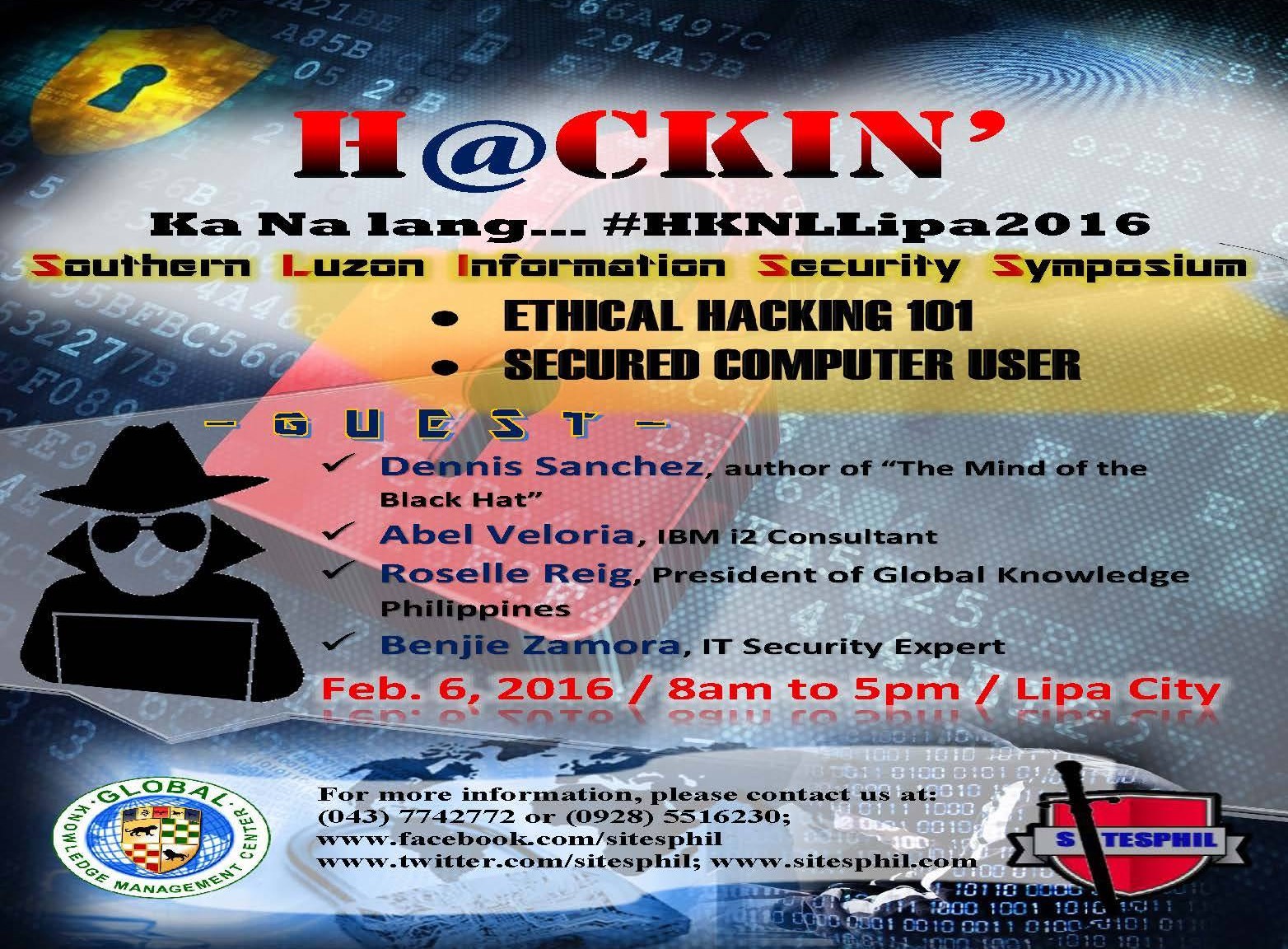
In an increasingly digital world, cyber threats have become unavoidable, especially with the growing shortage of skilled cybersecurity professionals. Sophie’s IT Services Philippines (SitesPhil) addresses this challenge by promoting IT and Information Security awareness while providing services such as secure web and application development, vulnerability assessments, and penetration testing.
As part of this advocacy, SitesPhil launched Hackin’ Ka Na Lang (#HKNL): The Cybersecurity Conference, a free to low-cost awareness initiative spearheaded by Benjie Brian Zamora, Founder and Head of IT and Consulting. The first event, #HKNLLipa2016, was held on February 6, 2016, at Lipa City Hall and became the first cybersecurity symposium in Southern Luzon. Sponsored by CompTIA, the event gathered over 400 students and professionals from Batangas and featured respected leaders in the IT industry.
Through #HKNL, SitesPhil continues its mission to educate, empower, and help build a safer and more security-aware digital community in the Philippines.
HKNL 2019

Hackin’ Ka Na Lang Ulit (HKNL) 2019 focused on expanding Information Security awareness across the Philippines, building on the momentum of the inaugural 2016 event. Held on February 16, 2019, at the Lipa City Youth and Cultural Center, the conference served as a landmark occasion as the first Philippine cybersecurity conference to be featured and endorsed by EC-Council, marking a significant milestone for the country’s digital security community.
A central theme of HKNL 2019 was the convergence of academic learning and professional expertise. The event aimed to bridge the gap between students and seasoned professionals, fostering a community dedicated to InfoSec. Speakers emphasized that participants must carry actionable "IT-Awareness lessons" into the real world, ensuring that theoretical knowledge translates into practical defense strategies for the evolving IT landscape.
Another key focus was the strategic collaboration between global industry leaders and local practitioners. Through partnerships with CompTIA, LoyalCoin, and GlobalKnowledge, and with sponsorship from the ISACA Manila Chapter, the conference explored how international security standards could be localized. The sessions highlighted that organizational resilience is built on strong partnerships and the integration of diverse security perspectives.
From a technical and strategic perspective, HKNL 2019 provided deep dives into Data Protection and Operational Security. Guest speakers such as Mr. Raymond Reglos (Data Protection Officer of AIM) and Mr. Ike Tuazon (Chief Security Officer of Loyalcoin) discussed the nuances of the Data Privacy Act and the security challenges of emerging fintech platforms. These were supported by sessions on IT competencies and certifications led by Mr. Orlando Seachon Jr. and Ms. Roselle Reig, emphasizing the need for a certified and skilled workforce.
Overall, HKNL 2019 emphasized collaboration, global recognition, and the empowerment of the next generation. It reinforced the idea that a successful cybersecurity ecosystem is built on continuous education and the active participation of both students and professionals in safeguarding the Philippines' digital future.
HKNL 2020

Hackin’ Ka Na Lang 2020 (#HKNL2020) brought together students, IT enthusiasts, and information security professionals at the University of the Philippines Los Baños (UPLB) on February 22, 2020, held at DL Umali Hall. Recognized as one of the most anticipated cybersecurity events in the country, the conference gathered participants from academic institutions and leading organizations across the Philippines.
The HKNL community continued to grow with new partners such as PayMaya, Globe MyBusiness, and ProximaX Philippines, alongside returning partners CompTIA and ISACA Manila Chapter, and UPLB’s student organization YSES. These collaborations contributed to a dynamic event experience through informative sessions and interactive partner booths.
Hackin’ Ka Na Lang 2020 featured in-depth discussions on cybersecurity fundamentals, blockchain, ethical hacking, and information security careers. Notable speakers included Elvin Mercader of ISACA Manila Chapter, BJ Edward Tuduran of Voyager Innovations (PayMaya), Ronneil Petterson of ProximaX Philippines, Orlando Seachon Jr. of CompTIA Philippines, Christopher ER Laylo of SitesPhil, and keynote speaker Benjie Brian Zamora, Founder and Head of Consulting of SitesPhil. Their talks delivered practical insights and hands-on learning experiences that resonated strongly with the audience.
Through HKNL 2020, SitesPhil further advanced its mission of building an information security-aware Philippines, continuing to educate, inspire, and empower the next generation of cybersecurity professionals.
HKNL 2021

Hackin’ Ka Na Lang (HKNL) 2021 is a cybersecurity and information technology conference that brought together industry professionals, educators, and students to discuss the most pressing trends, challenges, and best practices in the digital landscape. The event focused on strengthening cybersecurity awareness, improving IT skills, and preparing organizations and individuals for rapidly evolving threats.
The conference featured a diverse lineup of talks covering both technical and strategic aspects of cybersecurity. Key discussions included emerging cyber threats and how organizations can adapt their security strategies to address modern attack vectors. Speakers highlighted how cyber risks continue to grow in scale and complexity, emphasizing the importance of proactive security planning, risk management, and organizational readiness.
HKNL 2021 also explored the global IT skills gap, examining why demand for IT and cybersecurity professionals continues to rise and how certifications, training, and industry collaboration can help bridge this gap. The role of professional certifications and continuous learning was emphasized as a way to keep the workforce relevant in a fast-changing tech environment.
Another major focus was data privacy and digital identity. Sessions discussed fundamental data privacy principles, transparency, proportionality, and legitimate purpose, alongside emerging concepts such as Web 3.0 and Self-Sovereign Identity (SSI). These talks highlighted how users can gain greater control over their digital identities while balancing security, privacy, and usability.
From a technical standpoint, HKNL 2021 reinforced the importance of secure coding practices, particularly input validation. Speakers demonstrated how overlooked fundamentals can still lead to serious vulnerabilities and real-world attacks, reminding developers that strong security starts at the application level.
Overall, HKNL 2021 served as an educational and awareness-driven platform, reinforcing the importance of cybersecurity fundamentals, data privacy, and continuous skills development. It aimed to empower participants—especially students and early-career professionals—to better understand current cyber risks and prepare for future challenges in the IT and cybersecurity fields.
HKNL 2022

Hackin’ Ka Na Lang (HKNL) 2022 continued its mission of strengthening cybersecurity awareness by shifting the conversation toward real-world application, organizational impact, and operational security maturity. The conference brought together cybersecurity professionals, business leaders, and aspiring practitioners to explore how security functions within modern enterprises.
A major theme of HKNL 2022 was the idea that cybersecurity is no longer just a technical concern, but a business issue. Speakers emphasized how security risks directly affect business continuity, reputation, and financial stability. Discussions highlighted the importance of aligning cybersecurity strategies with organizational goals and effectively communicating risk to executives, boards, and senior management.
The event also placed strong focus on security operations, particularly in cloud environments. Sessions explored how organizations can design, operate, and scale Security Operations Centers (SOCs), both on-premise and in the cloud. Topics included threat monitoring, incident response, and the use of frameworks and technologies to improve visibility and response time in increasingly complex infrastructures.
On the technical side, HKNL 2022 addressed web application security and common attack vectors, such as Cross-Site Request Forgery (CSRF). Speakers demonstrated how seemingly simple vulnerabilities can lead to serious security breaches if not properly mitigated, reinforcing the importance of secure development practices and defensive coding.
Another key discussion revolved around career development and specialization in cybersecurity. Talks encouraged professionals to identify their strengths—whether in operations, governance, risk, compliance, or technical defense—and build focused skill sets to grow sustainably in the industry.
Overall, HKNL 2022 emphasized maturity, strategy, and execution. It bridged the gap between technical security concepts and business decision-making, empowering participants to not only understand cybersecurity threats, but also to effectively manage, communicate, and operationalize security within their organizations.
HKNL 2023
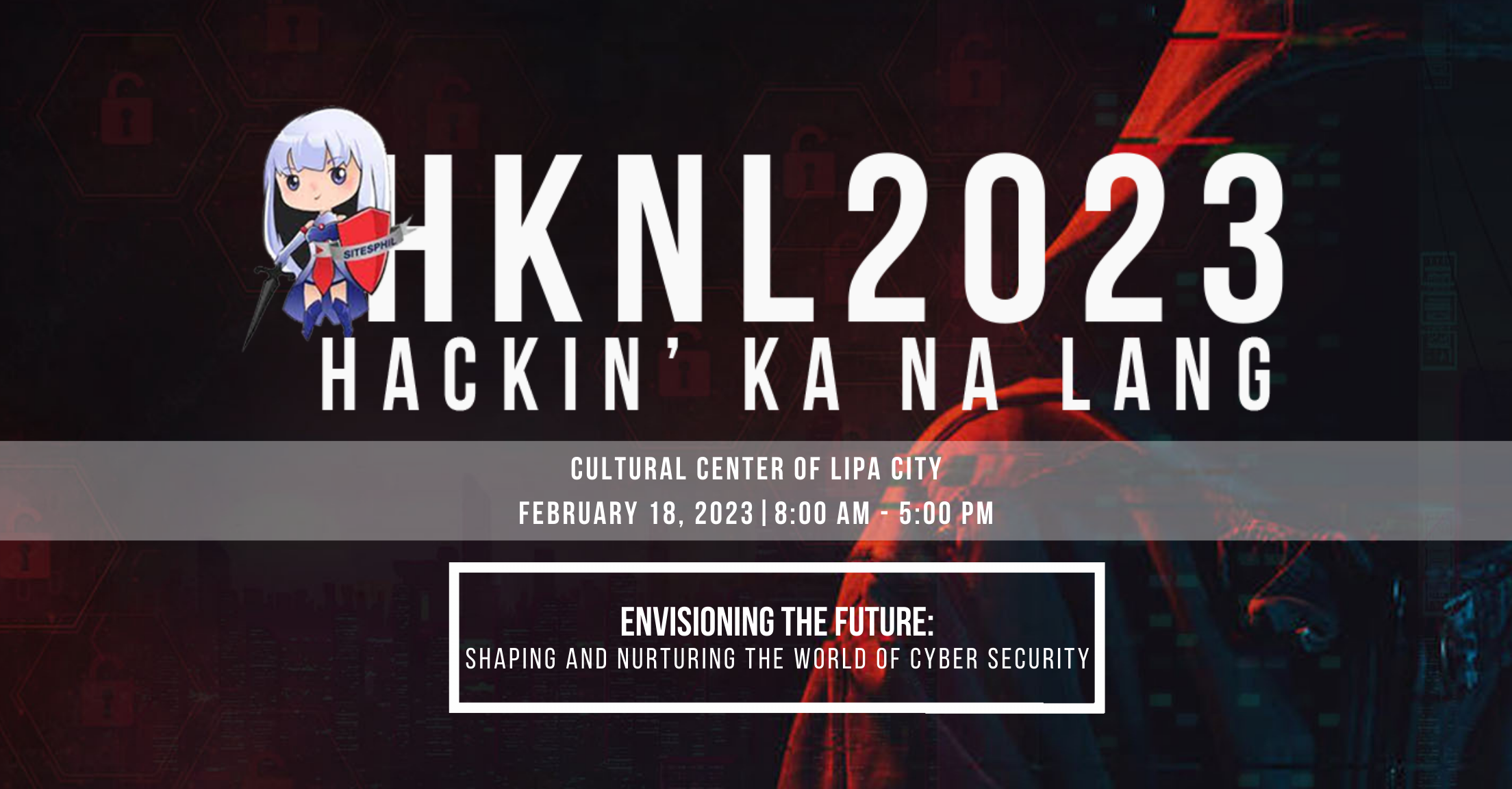
Hackin’ Ka Na Lang (HKNL) 2023 focused on redefining how cybersecurity is understood, delivered, and practiced in today’s rapidly evolving digital environment. The conference highlighted the shift of cybersecurity from a purely technical function into a strategic, operational, and leadership-driven discipline.
A central theme of HKNL 2023 was what cybersecurity truly means today. Speakers emphasized that modern cybersecurity professionals must go beyond tools and technology, taking on roles as investigators, team leaders, and guides who enable organizations to operate securely. The talks underscored the growing responsibility of security teams to balance protection, usability, and business objectives.
Another key focus was the mandate, services, and daily operations of cybersecurity teams. Sessions explored how security functions are structured, how responsibilities are defined, and how day-to-day security operations support overall organizational resilience. The importance of clear governance, collaboration with other departments, and continuous improvement was repeatedly emphasized.
From a technical perspective, HKNL 2023 delivered in-depth discussions on web application security, particularly Cross-Site Scripting (XSS). These sessions demonstrated how common vulnerabilities remain relevant and dangerous when secure coding practices are neglected. Speakers highlighted practical prevention techniques, secure design principles, and the real-world impact of application-layer attacks.
Overall, HKNL 2023 emphasized maturity, clarity of purpose, and leadership in cybersecurity. It reinforced the idea that effective cybersecurity is not only about defending systems, but also about defining roles, delivering reliable security services, and guiding organizations through complex risk landscapes.
HKNL 2024

Hackin’ Ka Na Lang (HKNL) 2024 focused on unveiling future horizons by exploring the limitless potentials of cybersecurity and Artificial Intelligence (AI) within today’s hyper-connected digital landscape. Organized by Sophie’s Information Technology Inc., the conference highlighted the evolution of cybersecurity into a dual-discipline that must now account for the rapid integration of machine learning and generative technologies.
A central theme of HKNL 2024 was the Responsible Use of Generative AI and the ethical stewardship required to manage it. Speakers, including Ms. Charmaine Valmonte, emphasized that while AI can "think" by processing vast datasets, it cannot "feel" or exercise human intuition. This underscores a shift in the role of cybersecurity professionals from technical gatekeepers to ethical guides who must ensure that AI systems are trustworthy, unbiased, and safe for both organizations and the broader community.
Another key focus was the "Human Firewall" and the urgent mandate for upskilling in the face of a global talent shortage. Sessions led by experts like Mr. Orlando Seachon Jr. explored the state of cybersecurity in the Philippines, which has become a primary target for cybercriminals. The talks emphasized that even the most advanced technical defenses are insufficient if the human element remains the weakest link, advocating for professional certifications and a culture of continuous learning to support national and organizational resilience.
From a technical perspective, HKNL 2024 delivered in-depth discussions on governance and risk management frameworks, specifically the NIST AI Risk Management Framework and ISO 42001. These sessions demonstrated how to systematically address the risks of AI adoption, such as data privacy leaks and algorithmic biases. Speakers provided practical insights into threat frameworks and the reality of modern vulnerabilities, including the rise of deepfakes and sophisticated social engineering that bypass traditional security controls.
Overall, HKNL 2024 emphasized readiness, ethical innovation, and the synergy between human and machine intelligence. It reinforced the idea that the future of the industry is not just about defending against attacks, but about harnessing the limitless potential of AI through structured governance, clear leadership, and a resilient, well-trained workforce.
HKNL 2025

Hackin’ Ka Na Lang (HKNL) 2025 marked a pivotal shift from awareness to action, focusing on operational resilience, AI governance, and cyber readiness in an era of accelerating digital threats. Organized by Sophie's Information Technology Inc., the conference emphasized how cybersecurity, Artificial Intelligence (AI), and national preparedness must converge to protect organizations and communities in an increasingly automated and interconnected world.
A defining theme of HKNL 2025 was “Security by Design in the Age of Autonomous Systems.” As AI-driven tools become embedded in business operations, speakers highlighted the urgency of integrating security, privacy, and accountability from the earliest stages of system development. Discussions centered on moving beyond reactive defense models toward proactive architectures where AI systems are continuously monitored, audited, and governed throughout their lifecycle.
Another major focus was Cyber Resilience and Incident Preparedness, reflecting the growing reality that breaches are no longer a matter of if, but when. Industry leaders and practitioners shared real-world case studies on ransomware response, business continuity, and crisis communication. These sessions reinforced the importance of tabletop exercises, red teaming, and cross-functional collaboration to ensure organizations can withstand, respond to, and rapidly recover from cyber incidents.
HKNL 2025 also strengthened its emphasis on Workforce Empowerment and Leadership Development. Building on the “Human Firewall” concept from previous years, the conference underscored the role of leadership, decision-making, and security culture in mitigating cyber risk. Talks highlighted the need for cybersecurity professionals to develop not only technical expertise, but also strategic thinking, communication skills, and ethical judgment to effectively influence organizational direction and policy.
From a governance and compliance standpoint, the conference delivered forward-looking discussions on AI regulation readiness, data protection maturity, and evolving global security standards. Speakers explored how organizations can align with emerging regulatory expectations while maintaining innovation, addressing challenges such as AI explainability, third-party risk, and cross-border data flows. Practical guidance was provided on translating frameworks into actionable controls that support both security and business objectives.
Overall, HKNL 2025 reinforced the transition from cybersecurity awareness to cyber resilience and accountability. It highlighted the necessity of embedding security into technology, people, and processes—positioning cybersecurity not merely as a technical function, but as a shared organizational responsibility. The event concluded with a clear message: the future of digital trust depends on disciplined governance, prepared leaders, and resilient systems capable of adapting to an ever-evolving threat landscape.
HKNL 2025
CYBERSECURITY CONFERENCE
© Sitesphil 2026. All Rights Reserved.